
JOE ZUCKER
Joe Zucker (1941–2024) has consistently, for over four decades, been regarded as one of America’s most innovative and idiosyncratic painters. Emerging in the late 1960s and early 1970s, Zucker developed a highly distinctive visual language that challenged conventional assumptions about the painted surface. Beginning in the 1970s, he experimented with what would become his signature technique: canvases constructed from cotton balls rolled in pigment and affixed to the support. This method produced richly textured, almost sculptural surfaces reminiscent of mosaics or reliefs, radically transforming the traditional flatness of painting into something tactile and materially complex.
Zucker’s practice places him in dialogue with artists such as Robert Ryman, sharing a sustained investigation into the fundamental properties of painting—surface, support, gesture, and material. However, Zucker pushed these concerns into a uniquely experimental territory, emphasizing process and materiality in ways that blur the boundaries between painting and object. His works often incorporate unconventional materials and serial procedures, foregrounding the act of construction as much as the final image.
Throughout his career, Zucker was associated with key figures in postwar American abstraction, exhibiting alongside artists such as Agnes Martin and Brice Marden at the influential Bykert Gallery in the late 1960s. He later worked with dealer Holly Solomon, a prominent advocate for experimental practices and emerging artists, further solidifying his position within the evolving landscape of contemporary art.
Over time, Zucker’s oeuvre expanded to include a wide range of series that explored repetition, pattern, and systems, often drawing from sources as varied as landscape, architecture, and cultural memory. Despite shifts in subject matter, his commitment to innovation and material experimentation remained constant, marking him as a singular figure within American art.
Zucker’s work is represented in numerous major public collections worldwide, including The Museum of Modern Art, National Gallery of Victoria, New Museum, Philadelphia Museum of Art, Whitney Museum of American Art, Brooklyn Museum, and Metropolitan Museum of Art, among many others, underscoring the lasting impact and institutional recognition of his work.
JOE ZUCKER: DUBIOUS CHARACTERS
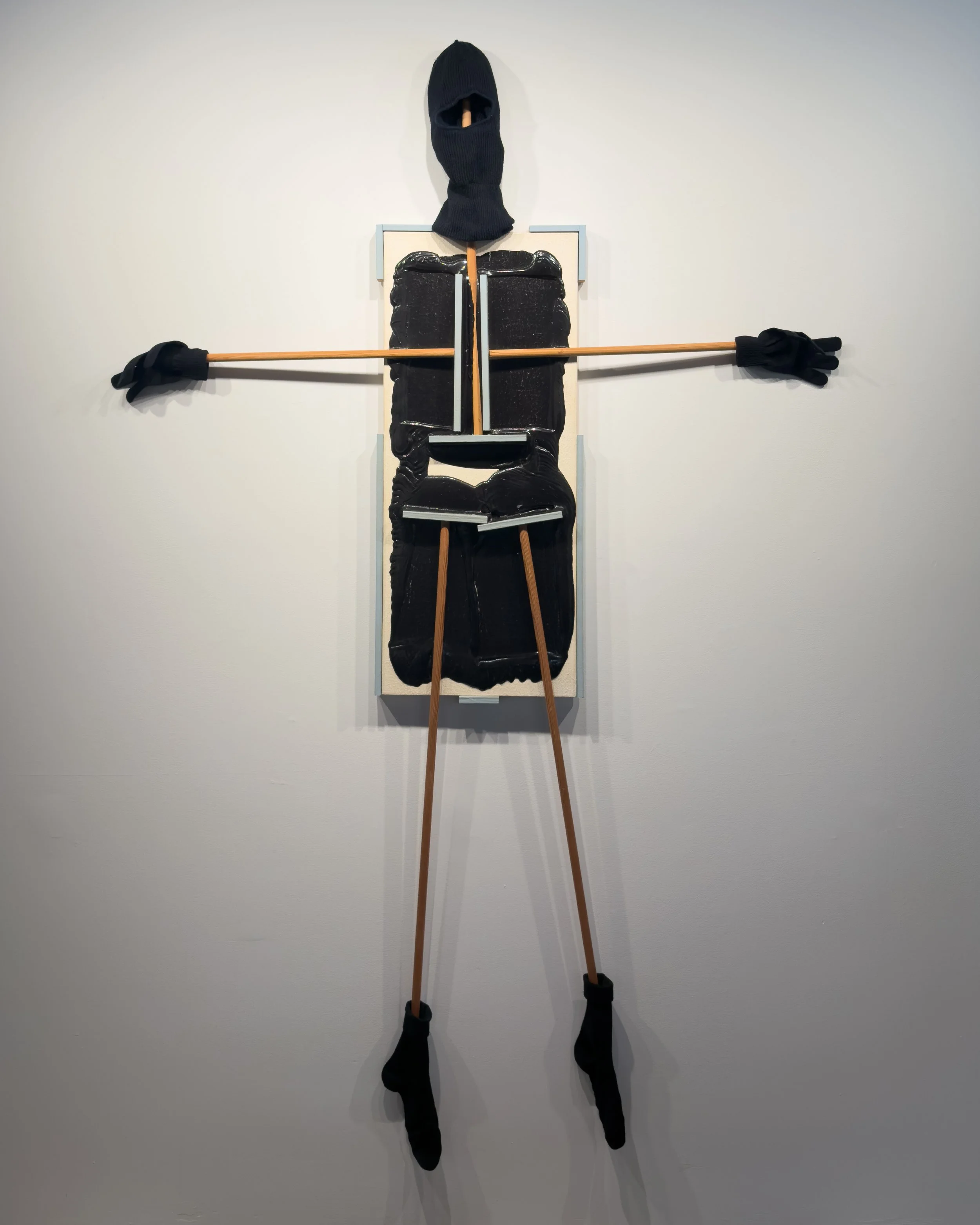
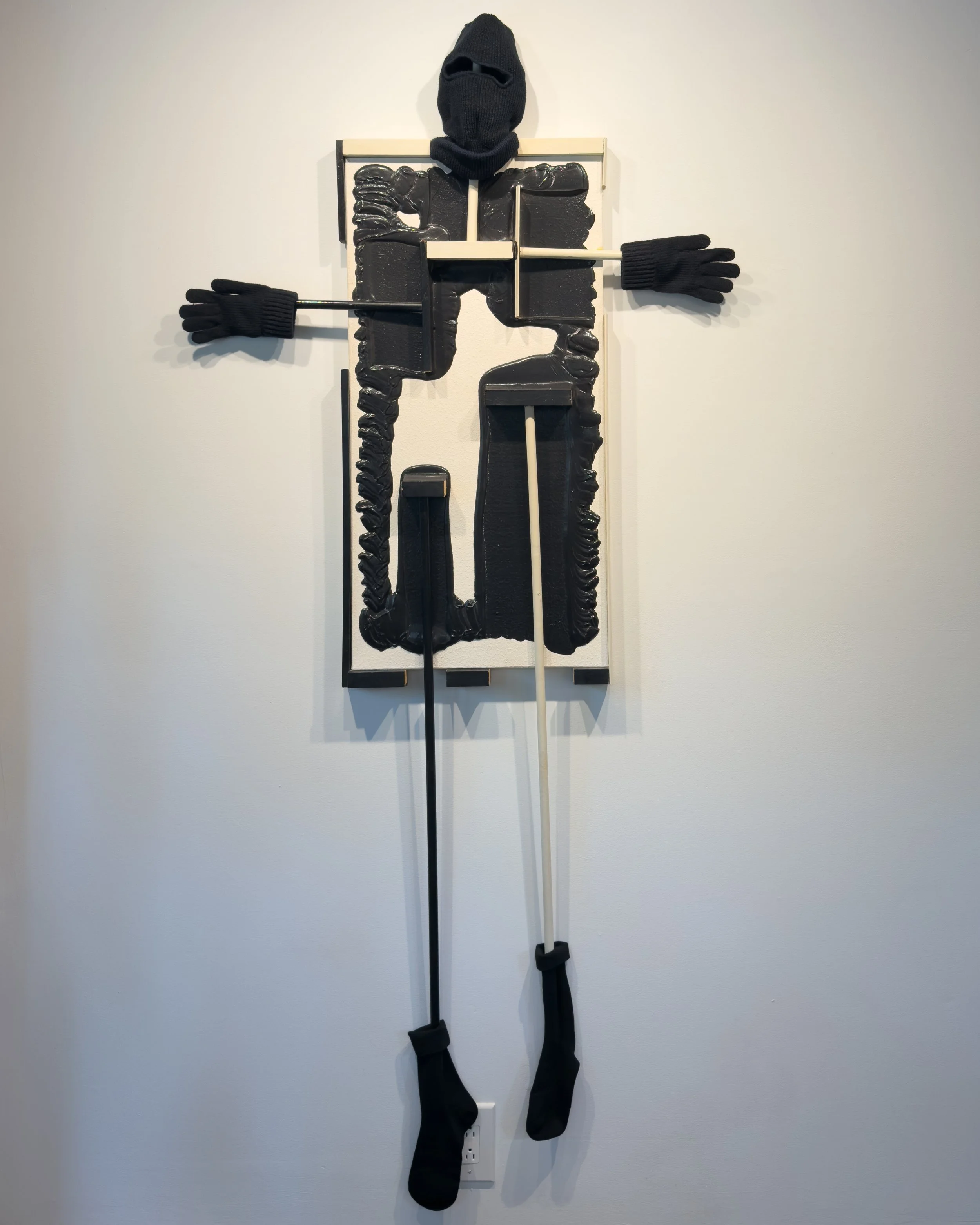
SELECTIONS FROM THE PORTRAIT OF JOSEPH SMITH,1984
1.
2.
3.
4.
5.
Portrait of Joseph Smith, Study Number Four, 1984
Graphite, ink, creola, charcoal on paper
20 x 30 in.Joseph Smith Stickman, 1984
On loan from the collection of Billy Sullivan
Cotton duck canvas, wood and enamel 37 x 91 in.Joseph Smith Stickman, 1984
Cotton duck canvas, wood and enamel
74 x 48 x 5 in.Joseph Smith Stickman, 1984
Cotton duck canvas, wood and enamel
90 x 42 x 5 in.Joseph Smith Stickman, 1984
Cotton duck canvas, wood, enamel
96 x 63 x 3 in.